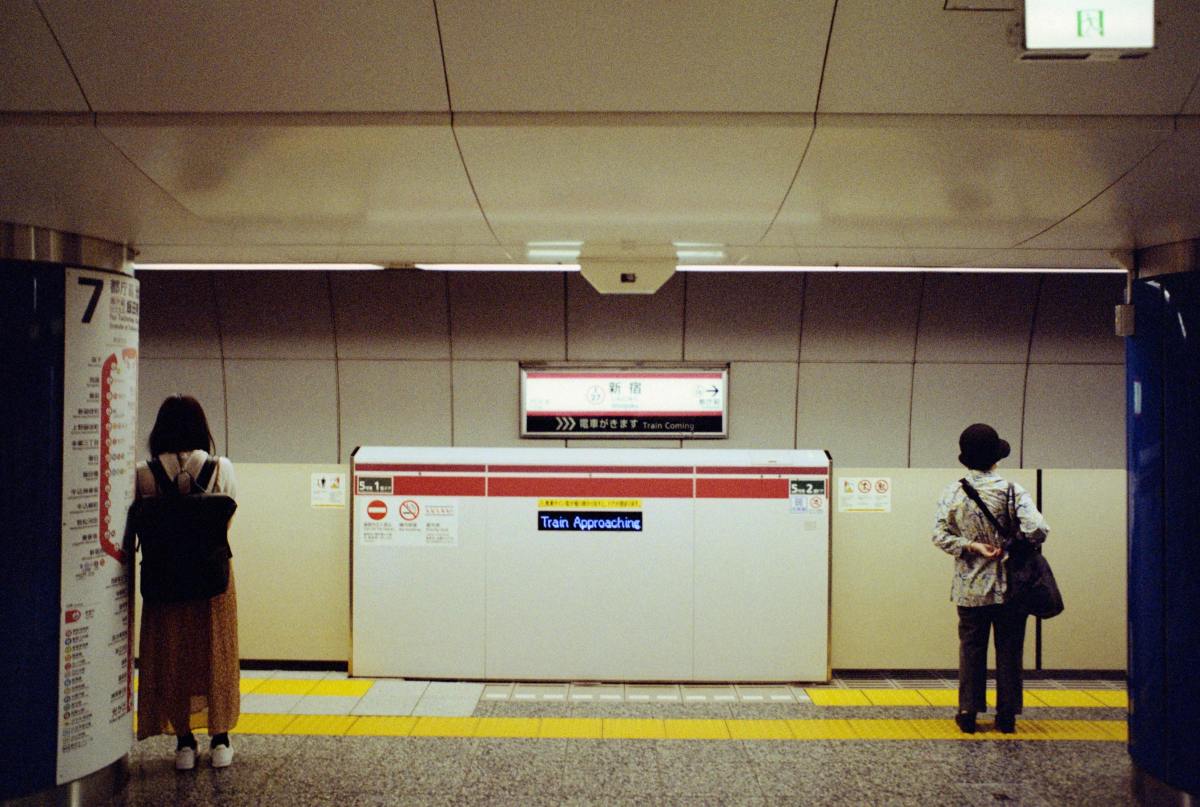
I’ll admit it.
Before my first trip to Japan, Tokyo’s train stations were probably the thing I worried about the most.
I’d seen the maps. Hundreds of stations. Dozens of train lines. Millions of people using them every day. Every article I read seemed to remind me that Tokyo had one of the busiest transportation systems in the world, and I convinced myself I’d spend half my vacation hopelessly lost underground.
Then I arrived and the first station felt exactly how I imagined it would.
Busy. Fast. Full of people who looked like they knew exactly where they were going while I stood there taking everything in.
But something interesting happened.
By the second day, I wasn’t nearly as intimidated.
By the third, I actually found myself enjoying it.
Tokyo’s stations didn’t become less busy. I simply started understanding how they worked.
Looking back, I wish someone had explained that to me before my first trip.
The first thing I realized was that the stations are incredibly organized.
At first glance, it feels like there’s information everywhere. Signs hang from the ceiling, arrows point in every direction, and station names seem to appear on every wall. It can feel like you’re supposed to read everything at once.
You’re not.
Instead, everything is built around simple patterns.
Each subway line has its own color. Most have a letter assigned to them, and every station has a number. Once I stopped trying to read every sign and started following a single color and letter, the entire system suddenly became much easier to understand.
It wasn’t nearly as complicated as it first appeared.
One thing that surprised me was just how much life exists beneath the streets.
Back home, a train station is usually just a place to catch a train.
In Tokyo, some stations feel like small cities.
I’d head underground expecting to walk straight to my platform and instead find bakeries preparing breakfast, coffee shops full of commuters, convenience stores, bookstores, pharmacies, restaurants, vending machines, and long shopping corridors stretching farther than I expected.
There were mornings when arriving a little early became part of the experience because there was always something interesting to look at before boarding my train.
Even simple things like finding a restroom or grabbing a drink were never difficult. Stations are incredibly well equipped, and if your Suica or PASMO card is running low, you’ll find recharge machines throughout the station. If you prefer buying individual tickets instead, the ticket machines are easy to find, and most include English as a language option.
Those little details made every day easier.
Then there are the ticket gates.
I’ll never forget the first time I tapped my Suica card and heard that familiar little chirp as the gate opened in front of me.
It sounds like such a small thing, but after a few days it became part of my morning routine.
One small piece of advice I’d pass along is to have your card ready before you reach the gate. Thousands of people move through the stations every few minutes, and the flow is remarkably smooth because everyone keeps moving. If you need to stop and reorganize your backpack or search for your phone, simply step to the side first.
You’ll appreciate how efficiently everything works.
One thing that took me a little longer to understand was that getting off the train wasn’t always the end of the journey.
Some stations have an incredible number of exits.
The first time I visited Shinjuku Station, I couldn’t believe how many different directions I could go once I left the platform. South Exit. East Exit. West Exit. Underground passages that seemed to go on forever.
It sounds intimidating, but I learned to trust Google Maps. More often than not, it tells you exactly which exit to use, saving you from wandering around looking for the right street.
That simple tip probably saved me hours over multiple trips.
You’ll also notice that stations have their own rhythm.
People stand patiently in line while waiting for trains. Riders step off before anyone boards. Escalators move with a quiet sense of order, although you’ll quickly notice that where people stand can vary depending on the city. In Tokyo, most people stand on the left and walk on the right, while Osaka traditionally does the opposite.
Watching everyone else for a few seconds is usually all you need to do.
If you have large luggage, a stroller, or need an elevator, they’re available in most stations, although they aren’t always as common as escalators. Signs clearly point the way, and you’ll often see families and travelers using them.
What surprised me most, though, wasn’t how efficiently the stations moved millions of people every day.
It was how quickly they stopped feeling overwhelming.
The station that looked impossible on my first morning became familiar by the end of my trip. The signs started making sense. The sounds became comforting. Even the rush of commuters somehow became part of the experience instead of something to fear.
If you’re planning your first trip to Japan, don’t let Tokyo’s train stations intimidate you.
Take a deep breath, follow the signs one step at a time, and trust that you’ll figure it out much faster than you think.
Before long, you’ll be tapping through the ticket gates, finding your platform without hesitation, and wondering why you ever worried in the first place.


I’ve been to Japan twice in my life. The first time was in 2018. I found Tokyo’s subways exceptionally intimidating then. There wasn’t a Suica card (or PASMO) then and mapping apps weren’t great for navigating transit. One day, I walked more than 40,000 steps in a single day rather than try to figure out the multiple subway lines from different companies.
I was there again last November. Google Maps and Apple Maps told me, not only which subways to take, but also, as you say, the exit number (all exits are numbered) to leave the station by. And I got an electronic, rather than physical Suica and loaded it on Apple Wallet on my phone. You could top it up directly on the wallet only with a Japanese credit card. But Suica has an app that you can use to top up the card directly from the phone using a foreign credit card, without going to a kiosk. I used it and it worked, adding the money to the Suica card in my Apple wallet happened in real time. It was great. I read that they’re going to allow foreign credit card top-ups directly in the wallet in the future without the need for the app, so it might be there already.
My transit intimidation didn’t exist at all on that last trip.
I agree with you completely. Go prepared with a good mapping app and a stored value card and don’t let the subways scare you.
LikeLike
My apologies. I just realized I got T-money, a South Korea card, mixed up with the Suica card. I was in South Korea even more recently and it was their T-money card (it works like Suica) that I had to top-up through an app. I was able to top up Suica in Japan directly in Apple Wallet. Sorry for the confusion.
LikeLike