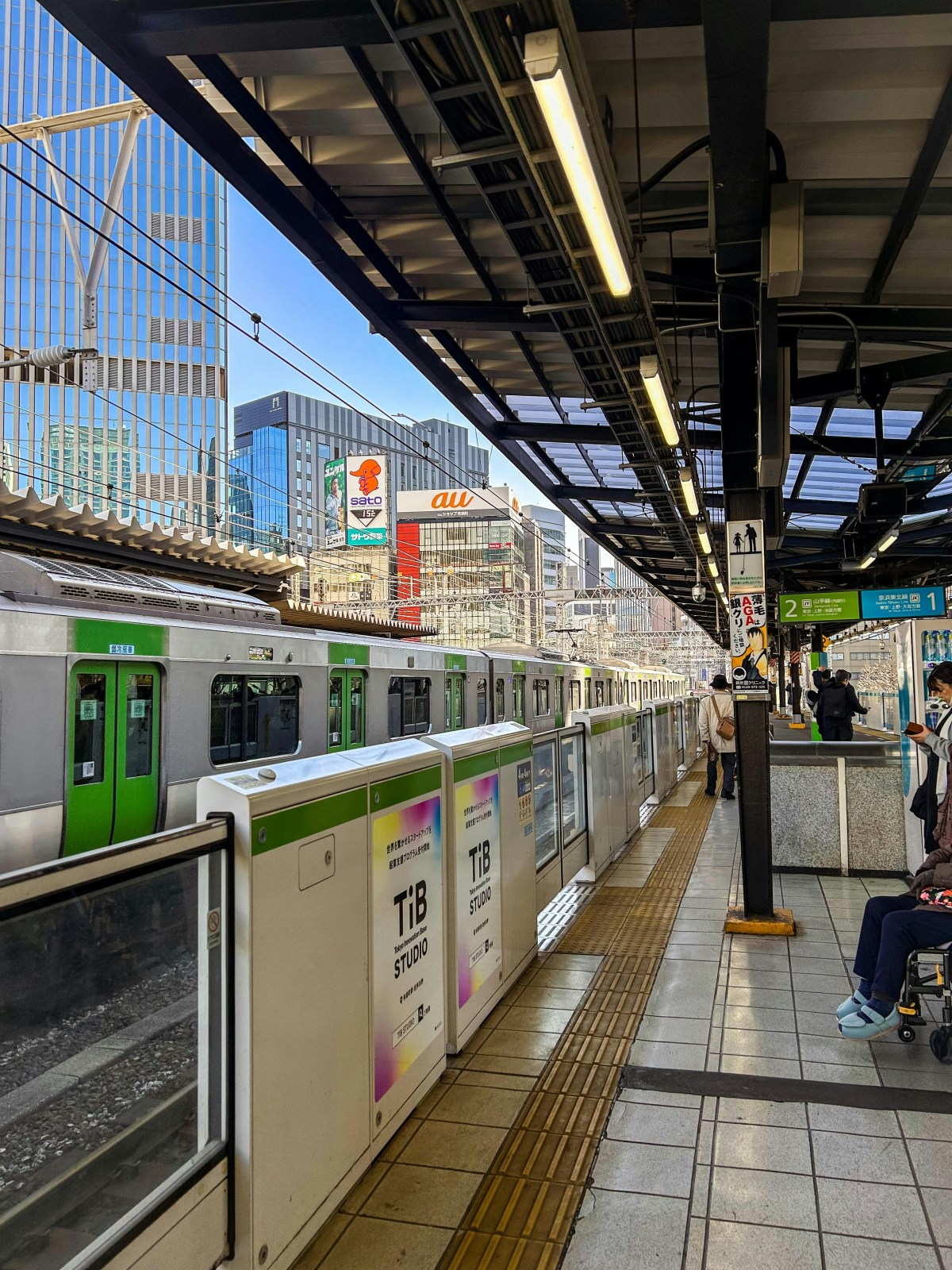
There is a very specific kind of panic that happens when you are sitting on a train in Japan and suddenly realize the station names are not matching what you expected.
Maybe you went the wrong direction.
Maybe you missed your stop.
Maybe you boarded a rapid train when you needed a local.
Maybe Google Maps told you one thing, you followed what you thought was the right platform, and now the little blue dot on your phone seems to be getting farther away from where you wanted to go.
When you are traveling alone, that moment can feel much bigger than it actually is.
There is nobody sitting beside you to say, “We’ll figure it out.”
You have to tell yourself that.
After multiple trips to Japan and plenty of time using trains in Tokyo and Osaka, one of the biggest lessons I have learned is simple:
Getting on the wrong train is usually an inconvenience.
It is not a disaster.
First, Don’t Panic
Your instinct might be to jump off the train immediately.
I would not do that.
Take a few seconds and figure out where you actually are.
Look at the screen above the doors. Listen for the next station announcement. Check the station number if the line uses them.
Then open Google Maps and compare your location with where you were trying to go.
Sometimes you are not even as lost as you think.
You may simply be going the wrong direction on the correct line.
Other times, you may have boarded the wrong train entirely.
Either way, you now have information.
And information makes the problem much easier.
Going the Wrong Direction Is Usually the Easiest Mistake to Fix
I think this is one of the most common mistakes for first-time travelers.
You find the correct line, walk onto the platform, get on the train and then realize you are heading away from your destination.
It happens.
Get off at the next convenient station.
Find the platform going in the opposite direction.
Get back on.
That is usually it.
You may lose ten or fifteen minutes, but your trip is not ruined.
The first time something like this happens, it can feel embarrassing.
After a while, it just becomes part of using public transportation.
Missing Your Stop Is Not a Crisis Either
The same thing applies if you simply miss your station.
Maybe you were looking at your phone.
Maybe you misunderstood the announcement.
Maybe the doors opened and closed before you realized that was your stop.
Get off at the next station and go back.
That sounds almost too simple, but that is exactly why I think new travelers need to hear it.
When you are alone in another country, your brain has a tendency to turn little mistakes into major problems.
Most of the time, the solution is much less dramatic.
Watch the Difference Between Local, Rapid and Express Trains
This can be a little more confusing.
Depending on the railway and line, different trains may stop at different stations.
A local train generally makes more stops.
Rapid or express services may skip some.
That can create the strange experience of watching your station pass by without the train stopping.
The best thing you can do is check the train type before boarding and compare it with what your navigation app is telling you to take.
But if you get it wrong, the same rule applies.
Get off when you can.
Recalculate.
Try again.
Let Google Maps Recalculate From Where You Are
One mistake I think travelers make is trying too hard to rescue the original route.
Forget the original route.
You are somewhere else now.
Let Google Maps start from your current location and give you a new one.
That may mean taking a different line.
It may mean going back one station.
It may even mean walking a little farther than you originally planned.
That is fine.
Your goal is not to perfectly execute the route you planned ten minutes ago.
Your goal is to get where you are going.
Ask the Station Staff
This is one of the easiest resources to forget about when you are nervous.
If you are truly confused, ask someone.
Japanese station staff deal with lost and confused passengers constantly.
You do not need perfect Japanese.
Show them the destination on your phone.
Point to the station name.
Use simple words.
You may be surprised by how quickly the problem gets solved.
Sometimes the hardest part is not the language barrier.
It is being willing to admit that you need help.
Give Yourself Extra Time When It Actually Matters
Getting lost on the way to dinner is annoying.
Getting lost when you have a Shinkansen reservation, airport train or tour departure is much more stressful.
That is why I always prefer giving myself extra time when something has a fixed start.
The train system in Japan is incredibly reliable.
That does not mean the traveler using it will always be.
You are allowed to build your own mistakes into the schedule.
The Mistake Becomes Part of Learning Japan
I still think back to my first trip to Japan and how intimidating the trains felt.
Every platform seemed complicated.
Every transfer felt important.
Every mistake felt like proof that I did not know what I was doing.
Eventually, something changes.
You make enough mistakes that you realize you know how to fix them.
That is a big moment for a solo traveler.
You stop expecting yourself to get everything right.
You start trusting yourself to figure things out when you do not.
And that lesson goes far beyond trains.
You are going to get something wrong when you travel alone.
You will turn down the wrong street.
You will misunderstand something.
You will miss an exit.
You may even end up traveling several stations in the wrong direction.
That is okay.
Get off.
Check where you are. Find the new route. Keep going.
Sometimes confidence is not knowing exactly what to do.
Sometimes it is knowing that even when you mess up, you can still find your way.
Make sure to read my post about What I Wish I Knew Before Using Tokyo’s Train Stations to learn more about the trains of Japan, specifically more about the insanity that is the Tokyo train system.


