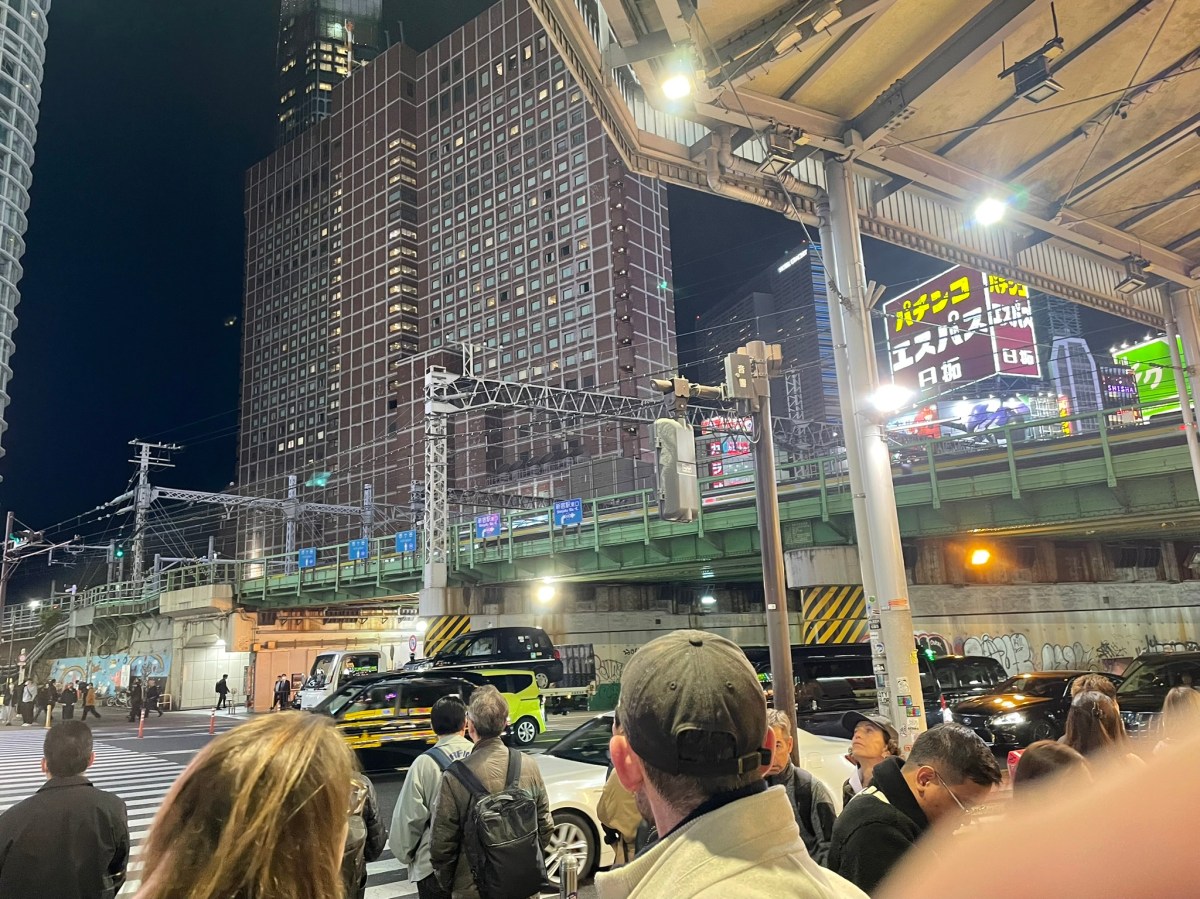
When people talk about travel in Japan, they usually talk about destinations.
Tokyo. Osaka. Kyoto. A specific temple, a neighborhood, a restaurant worth waiting in line for. Those places matter — but the longer I spend in Japan, the more I realize that the parts that stay with me live in between.
The moments that aren’t planned.
The stretches of movement.
The time spent getting from one place to another.
In Japan, the space between destinations is often better than the destination itself.
Movement Is Part of the Experience
Getting around in Japan is constant motion.
Subways weaving under cities.
Local trains stopping every few minutes.
The Shinkansen slicing cleanly through the countryside.
Short taxi rides.
Long walks that turn into much longer ones.
You’re always moving — but it never feels rushed.
Transit isn’t something you endure to get where you’re going. It’s something you settle into. Stations are clean and thoughtfully designed. Trains arrive when they’re supposed to. Signs are clear, often bilingual, and quietly reassuring.
Instead of stressing about logistics, you start paying attention to what’s around you.
That’s when the trip changes.
What You Notice When You’re Not in a Hurry
Walking between stops becomes the highlight.
Architecture shifts block by block — modern glass giving way to older, narrower buildings with personality. Streets open into unexpected pockets of quiet. A restaurant with no English signage and no online hype sits half-full, clearly serving the same locals it always has for years.
You’d never find these places by searching online or waiting for social media to bring it to you.
You find them by passing through.
There’s a freedom in not rushing to the next thing. When the destination isn’t urgent, curiosity takes over. You slow down just enough to notice what you would’ve walked past otherwise.
Japan rewards that pace.
Hidden in Plain Sight
Some of the best meals I’ve had in Japan weren’t planned.
They were discovered while walking.
While waiting.
While being slightly off-route.
A ramen shop tucked under train tracks.
A café on the second floor of an unassuming building.
A tiny storefront that looks like nothing until you’re inside.
These places don’t announce themselves. They don’t compete for attention. They exist quietly, confidently — waiting for people who aren’t in a hurry.
And somehow, those moments feel more personal than any must-see spot.
Waiting Doesn’t Feel Like Wasted Time
Even waiting feels different in Japan.
Waiting on a platform.
Waiting for a crosswalk.
Waiting for a train to pull in.
There’s an order to it. A calm. A shared understanding that everyone will get where they’re going. No pushing. No chaos. No sense that time is being stolen from you.
That mindset seeps in.
You stop checking your phone constantly.
You stop counting minutes.
You just exist in the moment — surrounded by movement, but not overwhelmed by it.
Walking Until the Day Disappears
It’s easy to rack up 20,000 steps a day in Japan without realizing it.
You walk because the streets invite it.
Because neighborhoods blend into one another.
Because turning down one more street feels easier than pulling out a map.
The walking doesn’t feel like effort. It feels like permission.
Permission to wander.
To get lost briefly.
To let the city reveal itself on its own terms.
By the time you realize how far you’ve gone, the day is already full.
Why the In-Between Matters
The destinations will always be there.
The landmarks will still impress.
The highlights will still be worth seeing.
But the in-between moments — the transitions, the movement, the quiet discoveries — are what make Japan feel alive.
They’re where you stop consuming a place and start engaging with it.
Where travel stops feeling like a checklist.
Where presence replaces urgency.
Japan taught me that getting somewhere isn’t the point.
Being open on the way there is.
And sometimes, the space between destinations is exactly where the trip actually happens.

 Travels With Matt Blog